
How to ensure worker safety when working with lead – practical occupational health and safety guidelines
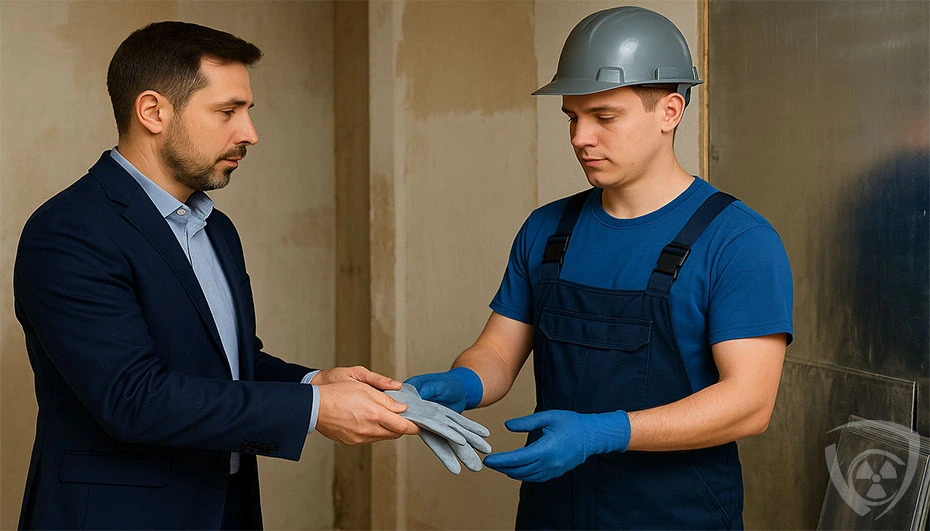
Lead is a metal with exceptional physical properties: it is soft, malleable, very dense, and perfectly absorbs ionizing radiation. Thanks to this, it forms the basis of modern radiological protection, and products such as lead foil and lead sheet are widely used in medicine, industry, energy, and laboratories.
On the other hand, lead is a toxic substance, and improper handling can have serious health consequences. Once absorbed by the body, it is not easily removed — it accumulates in tissues, bones, and internal organs. Therefore, working with lead requires not only technical knowledge but also responsibility and strict adherence to safety regulations.
Companies involved in the production or installation of lead materials, such as plates, tapes, or foils, must therefore implement effective occupational safety procedures. Their goal is not only to protect workers’ health but also to ensure product quality and compliance with applicable standards.
Hazards associated with lead exposure
Anyone working with lead — whether installing lead sheets in walls, cutting lead foil, or performing welding tasks — is exposed to contact with dust and fumes of this metal.
The most common routes of exposure are:
- Respiratory route – lead dust is generated during mechanical processing, such as cutting, grinding, or drilling. Without proper ventilation and filtering masks, fine metal particles can enter the lungs and bloodstream.
- Oral route – transferring contaminants on hands or clothing. A common mistake is eating meals in the work area or failing to wash hands thoroughly after finishing a shift.
- Dermal route – prolonged contact with the metal can lead to the absorption of trace amounts of lead through the skin, especially in the case of minor skin abrasions.
Prolonged exposure to lead can lead to so-called lead poisoning — an occupational disease manifested by abdominal pain, fatigue, memory disorders, anemia, or weakened immunity. Among people working in the radiology industry, elevated levels of lead in the blood (Pb-B) are also reported, which requires regular medical monitoring.
It is also worth emphasizing that the danger is not limited to large industrial plants. Even a small workshop installing self-adhesive lead foils or cutting sheets of lead plates should follow the same health protection principles.
Employer responsibility – duties and regulations
Under Polish law, working with lead is classified as work in hazardous conditions. According to the Labor Code and the Regulation of the Minister of Health on chemical agents, the employer is obliged to:
- conduct an occupational risk assessment,
- maintain a register of exposed employees,
- provide individual and collective protective equipment,
- organize air monitoring for lead concentration,
- refer employees for preventive medical examinations (initial, periodic, and control),
- conduct occupational health and safety training.
The employer should also document the handling procedures for lead materials and provide appropriate workplace instructions.
All products used in radiological protection — including lead sheet and lead foil — must have proper certifications (e.g., EN 12588, declaration of conformity, certificate 3.1).
Failure to comply with these regulations may result not only in financial penalties but also in the loss of company credibility. For businesses operating in the medical or construction sectors, it is especially important to demonstrate that the materials and procedures used meet strict standards.
You can read more about current standards and certifications in the article EU standards and certificates in radiology 2025 – EN 12588, 3.1, new regulations.
Personal protective equipment – the key to safe work
Personal protective equipment (PPE) represents the last line of defense between a person and a harmful substance. When working with lead, it is absolutely essential and must be used in accordance with the manufacturer’s instructions.
The basic PPE includes:
- li>P3 or HEPA class filtering masks and respirators that capture the finest lead dust particles,
- protective gloves made of latex, neoprene, or nitrile – resistant to heavy metals,
- protective goggles or face shields to protect the eyes from particles,
- work clothing (e.g., X-ray aprons, hooded coveralls, antistatic garments),
- safety footwear with non-slip soles and closed toes.
It is also important to keep work clothing clean — lead contamination should never be removed using household methods. Washing should take place in specialized industrial laundries or internally within a designated area of the facility.
Employees must be aware that lead foil, although thin, can generate microscopic lead particles during cutting or peeling. Therefore, any work involving the processing or installation of foil should always be carried out while wearing gloves and with local ventilation turned on.
Meanwhile, lead sheet, used for shielding X-ray room walls, is heavy and prone to deformation. Handling it requires protection not only against chemical contact but also against physical strain — lumbar support belts and ergonomic lifting techniques are recommended to prevent back injuries.
Organization of a safe workplace
A safe workplace is one where the risk of exposure to lead dust, fumes, and waste has been minimized.
Key elements of proper organization:
- Mechanical ventilation – it should be designed to extract air directly from the area where dust is generated. The system must be equipped with HEPA filters and serviced regularly.
- Designated work zones – the work area (the so-called dirty zone) must not be connected to the social area. In facilities where lead sheet is produced or processed, it is advisable to use sanitary airlocks and transitional clothing.
- Work surfaces – should be smooth, non-absorbent, and easy to clean. Using stainless steel countertops makes it easier to remove lead dust.
- Cleanliness – daily wet cleaning and regular disinfection reduce the risk of secondary contamination. Household vacuum cleaners are prohibited — they disperse particles instead of removing them.
Every company should develop its own cleaning schedule and workstation inspection plan.
In practice, the so-called “OHS checklist” works well, where the following are recorded daily:
- whether the ventilation is working,
- whether the protective clothing is clean,
- whether the waste is properly secured,
- whether employees follow hygiene rules.
You can read more about organizational mistakes in the article The most common mistakes when installing X-ray shields – and how to avoid them.
Work environment monitoring and preventive examinations
Regular monitoring of the work environment is an obligation for every facility that uses materials containing lead. It is not only a matter of regulatory compliance but, above all, protection of employees’ health and quality control of technological processes.
Measurement of lead concentration in the air
Measurements should be carried out at least twice a year, and more frequently in the case of new technologies or process changes. The test is performed in the so-called breathing zone, i.e., at the height of the worker’s face, which makes it possible to determine the actual level of exposure.
The permissible concentration of lead in the air (OEL) is 0.05 mg/m³. Exceeding this value requires immediate corrective action: improving ventilation, reducing working time in the contaminated zone, or using additional shielding.
In facilities where lead sheets are processed, surface contamination testing using the wipe method also works well. It helps identify areas where dust accumulates unnoticed (e.g., on window sills or in table gaps).
Preventive medical examinations for employees
Medical examinations should be carried out:
- initially – before being allowed to start work,
- periodically – every 6–12 months,
- control examinations – after a break from work or in case of symptoms of poisoning.
The primary test is the determination of blood lead levels (Pb-B). For occupationally exposed individuals, the permissible value is 40 µg/dl.
The examinations also include blood morphology, liver function tests, kidney function assessment, and a medical interview.
Employees should be informed about the results of measurements and examinations — transparency increases awareness of hazards. In case of exceeding the limits, temporary removal from work and implementation of corrective actions in the environment are required.
Management of lead-containing waste
Every lead processing operation — cutting, forming, gluing, or assembling — generates waste. Scraps of lead foil, pieces of lead sheets, used gloves, or ventilation filters must be treated as hazardous waste.
Classification and storage
Lead waste is classified under code 17 04 03 according to the waste catalog. It must be stored in tightly sealed, clearly labeled containers marked “Contains lead – hazardous waste.” The containers should be closed and placed in a designated storage area, away from food and consumables.
Transport and disposal
The collection and transport of such waste may only be carried out by a company authorized to handle hazardous waste. The transfer must be confirmed with a Waste Transfer Card (WTC).
It is strictly prohibited to dispose of lead scraps in regular waste or to melt them independently — this poses a risk of environmental contamination and severe administrative penalties.
Lead recycling – an ecological alternative
Modern companies are increasingly implementing lead recycling. The recovered metal, once remelted, can be reused for the production of X-ray shields, plates, or foils. This solution aligns with the principles of the circular economy (CE), helping to reduce the demand for primary raw materials. You can read more about how to protect the environment when using lead materials in the article Ecological aspects of using lead – facts and myths.
Employee training and awareness building
Even the best-designed procedures will not serve their purpose if employees do not understand why they must be followed. Training on occupational health and safety principles when working with lead should be mandatory for every new employee and repeated periodically.
Scope of training
A well-prepared training includes:
- knowledge about the toxicity of lead and its effects on the human body,
- methods of minimizing contact with the metal,
- proper use and storage of PPE,
- procedures for emergency situations,
- cleaning and decontamination procedures.
It is worth supplementing the training with visual materials (e.g., videos, presentations) and workplace instructions displayed in a visible location.
Safety culture
In companies involved in radiological protection, the best results come from fostering a culture of safety. This means that every employee — regardless of position — feels responsible for their own safety and that of their coworkers. Employees are encouraged to report comments, suggest improvements, and respond immediately to any irregularities.
A good practice is the so-called “safety minute” — short meetings at the beginning of a shift during which current risks are discussed and workplace hygiene rules are reviewed.
Emergency procedures and contamination response
Despite all precautions, incidents can still occur. Spilled lead dust, damaged foil, or a leaked lead-containing solution requires immediate action in accordance with the established procedure.
Step-by-step procedure
- <
- Securing the area – immediately stop work and isolate the contaminated zone.
- Evacuation of unprotected personnel – only individuals equipped with full PPE may remain in the contaminated area.
- Collection of contamination – use damp cloths, sponges, or special sorbents. The use of brooms or household vacuum cleaners is strictly prohibited.
- Surface decontamination – after removing contaminants, the surface should be wiped with a chelating agent or lead neutralizer.
- Waste disposal – contaminated materials (cloths, gloves) should be placed in a sealed container for hazardous waste.
- Incident reporting – the event should be recorded in the occupational health and safety register, along with a description of actions taken and conclusions.
In large companies, it is advisable to appoint a dedicated chemical safety coordinator who will oversee emergency response procedures and maintain proper documentation.
Industry best practices
In the radiology and construction industries, there are many proven solutions that help maintain a high level of safety. Here are a few of them:
- Use of self-adhesive lead foil instead of traditional sheets – minimizes the need for cutting and reduces dust emission.
- Installation of prefabricated lead sheet panels – speeds up work and reduces the risk of contact with the metal.
- Automated exhaust systems with dust sensors – ensure immediate activation of ventilation when limits are exceeded.
- Lead-free rest areas – separate rooms where meals can be eaten without the risk of secondary contamination.
- PPE tracking system – monitors issue dates, cleaning, and replacement of protective clothing.
Such solutions not only enhance safety but also facilitate audits and improve the company’s image in the eyes of clients.
Summary
Safety when working with lead is a multi-stage process that requires consistency, discipline, and responsibility. Each stage — from production and storage to the installation of lead foil and lead sheet — must be planned with a focus on protecting workers’ health and minimizing metal emissions into the environment.
Caring for occupational health and safety is not only a legal requirement but also proof of a company’s professionalism.
An employer who invests in training, protective equipment, and monitoring gains more than just regulatory compliance — they earn customer trust and brand stability.
Properly organized radiological protection safeguards not only against radiation but also against the consequences of improper handling of lead.
This demonstrates that a modern approach to safety is an investment in people, quality, and the future of the entire industry.


