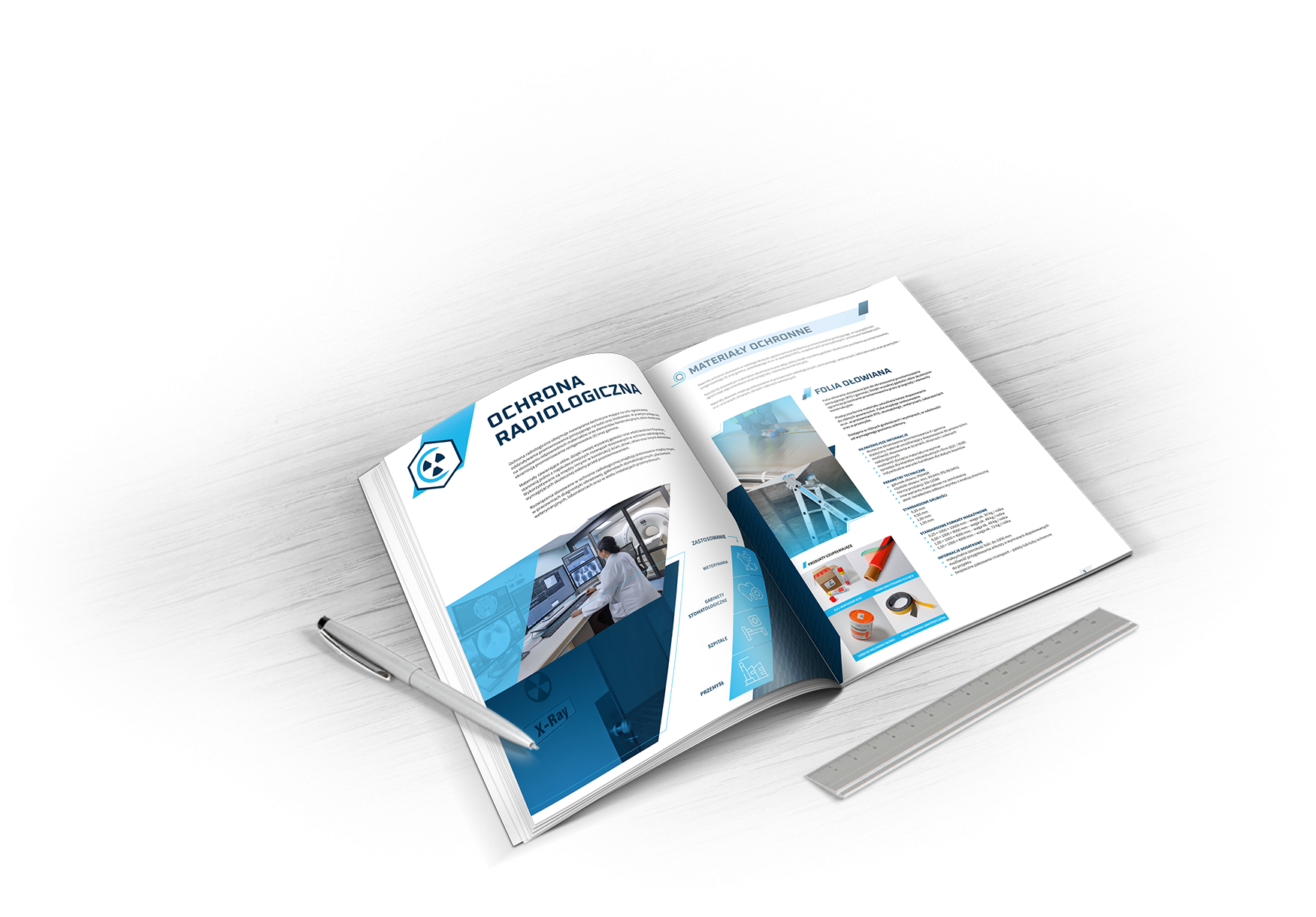
The Production Process of Lead Foil and Lead Sheets – From Raw Material to Finished Product
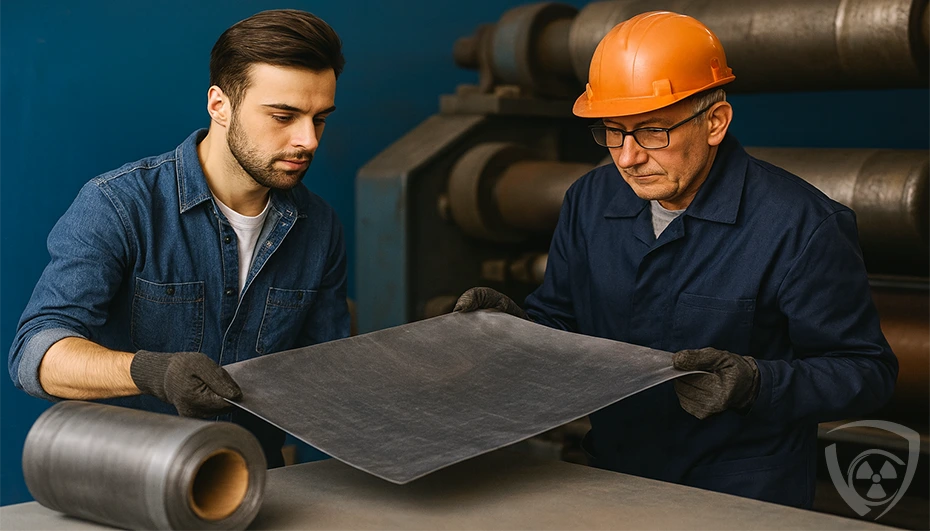
Lead sheets and RTG lead foils are fundamental materials used in protection against ionizing radiation. They ensure the safety of patients and staff in diagnostic laboratories, hospitals, and dental offices.
Many people searching for products type into Google phrases such as “lead sheet price” or “self-adhesive lead foil.” However, price or thickness alone is only part of the information. Equally important is how the product was made and whether it meets quality standards.
Raw material – the foundation of quality for lead sheets and foils
Where does lead come from?
Two sources of raw material are used in production:
- primary lead – extracted from ores and refined,
- secondary lead – recovered through recycling.
In both cases, chemical purity is crucial. The presence of other metals reduces the shielding capacity and durability. That is why every production batch undergoes laboratory analysis.
Recycling and ecology
Lead is a metal that can be remelted many times. Recycling reduces costs and environmental impact. In the field of radiological protection, it is becoming an increasingly important standard, which we described in more detail in the article on sustainable lead management.
Technologies for producing lead sheets and foils
Rolling – the most commonly used method
Rolling makes it possible to produce lead sheets with thicknesses from 0.5 mm to several millimeters. The process involves compressing heated metal between rollers until the desired thickness is achieved. Thanks to this:
- the product is uniform across the entire surface,
- its parameters are easy to control,
- finished sheets comply with the EN 12588 standard.
This is the technology used for most products in the industry.
Casting – for the thickest plates
Where an exceptional barrier is required (e.g. in medical bunkers or reactor shielding), casting of lead plates is used.
- Molten lead is poured into molds and cooled, producing plates up to several dozen mm thick.
- They are less flexible but guarantee the highest level of protection.
Lamination and adhesive layers
An additional stage is used in the production of self-adhesive lead foils. A special adhesive layer is applied to their surface, protected with paper or a protective film. This makes the product easy to install on doors or walls – without additional tools.
Quality control and certifications
Tests and measurements
Each product batch undergoes:
- thickness control,
- uniformity testing,
- mechanical tests (resistance to bending and cracking),
- surface inspection for defects.
Certificates and standards
The most important documents are:
- Certificate 3.1 – confirming the material’s parameters,
- EN 12588 – the standard for rolled lead sheets and foils.
Products with these certificates ensure that radiological protection will be effective and compliant with legal requirements.
Commercial forms – how do they reach the customer?
Lead sheet and lead foil are available in different forms, allowing them to be tailored to individual needs:
- Lead sheet in sheets – for large surfaces (walls, fixed shields),
- Lead sheet cut to size – tailored e.g. to doors and construction elements,
- Lead foil in rolls – thin, flexible, easy to transport,
- Self-adhesive lead foil – quick installation on walls and doors.
More details can be found at lead sheet and lead foil.
Applications – not only in medicine
Medicine and dentistry
The widest use of foil and sheet is in shielding for X-ray rooms, CT scanners, and dental offices. They help protect both patients and medical staff.
To learn whether foil or sheet is a better choice, see the article: Lead foil or lead sheet – which provides better protection in diagnostic imaging?
Construction
Lead sheet has been used in construction for hundreds of years – as roof and facade insulation, in monument restoration, and in creating decorative architectural elements.
Industry and electronics
Lead foil RTG is also used in technology:
- shielding electromagnetic interference (EMI),
- protecting delicate electronic systems,
- reducing noise and vibration in machinery.
Summary – from raw material to finished product
The production of lead sheet and lead foil is a process that requires precision, expertise, and quality control. Whether you choose rolled lead sheet EN 12588, a cast plate, or self-adhesive lead foil – the effectiveness of protection depends on the quality of production.
That is why, when choosing materials for an X-ray room or industry, it is worth relying on trusted suppliers who offer certified products and full documentation. This guarantees that your investment will be safe and compliant with legal requirements.
Check the offer in the Radiological protection section and choose the solution best suited to your needs.