
How does lead glass differ from regular glass?
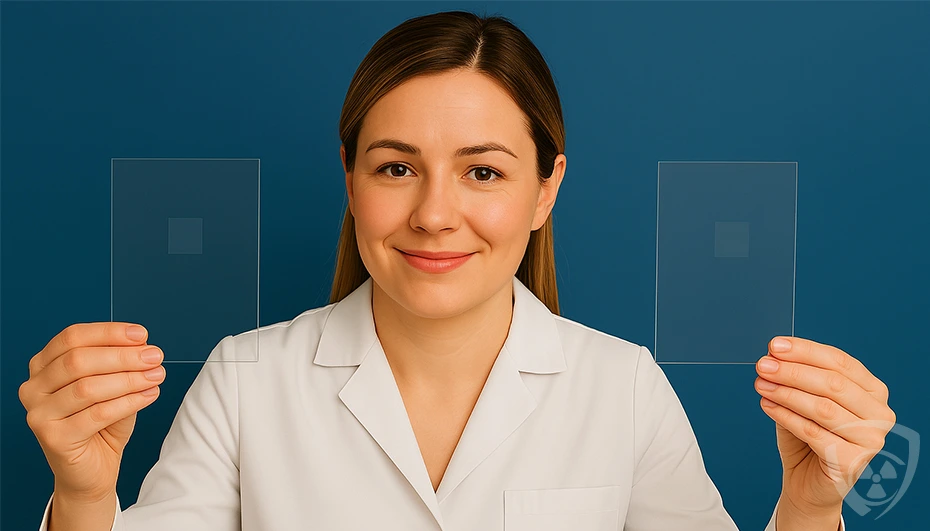
Lead glass is an essential material in radiological protection, used wherever effective shielding against harmful X-ray radiation is required. While at first glance it resembles regular glass, its properties are entirely different, primarily due to its high lead oxide content, which gives it exceptional radiation-absorbing capabilities. This makes lead glass invaluable in hospitals, laboratories, and industrial facilities, protecting personnel and patients from the harmful effects of ionizing radiation exposure. In this article, we take a closer look at the production process of lead glass, its unique characteristics, advantages compared to other protective materials, and diverse practical applications.
How is lead glass made?
The production of lead glass begins with carefully selecting raw materials, the main component being lead oxide (PbO). Typically, PbO content ranges from 50% up to 70%, directly influencing the glass’s protective properties. Next, these materials are mixed and melted at high temperatures, after which the molten glass is shaped, gradually cooled, and subjected to quality-control processes to ensure appropriate transparency and effective radiological protection.
Stages of lead glass production:
- Selection of raw materials: The process begins with carefully selecting and weighing raw materials. The main components include high-quality quartz sand, purified lead oxide (PbO), and special melting additives such as soda ash or potash (potassium carbonate, chemical formula K₂CO₃), which acts as a flux in glass production. All these ingredients are precisely measured and mixed in strictly defined proportions, essential for achieving the desired parameters of the glass—such as transparency, density, and effectiveness in radiation absorption.
- Melting the mixture: The prepared mixture of raw materials is placed into a glass furnace and melted at a very high temperature, typically around 1300°C. The melting process is carried out under strictly controlled conditions to obtain a homogeneous, dense, and bubble-free molten glass mass. High temperatures and extended melting times ensure complete dissolution of lead oxide and other ingredients, ensuring uniformity in the resulting glass.
- Forming the glass: Once the molten mixture reaches the appropriate consistency, it is carefully poured onto special forming tables made from steel or other resistant materials, where it is initially spread. The next step involves rolling—where the glass mass is evenly distributed using precisely calibrated rollers, ensuring glass sheets of desired technical parameters. At this stage, the glass can be given a specific thickness and undergo controlled cooling, protecting it from cracking and ensuring optimal internal structure.
- Glass finishing: After forming and cooling, the finished glass sheets undergo detailed final processing. During this stage, the glass is meticulously cut to precise dimensions according to customer orders, followed by edge smoothing and polishing. Polishing ensures a perfectly smooth, glossy surface, free of imperfections. All finished products undergo final quality inspections, verifying dimensions, density, transparency, and protective properties.
Due to the meticulous production process—including precise ingredient selection, carefully controlled melting, and forming — lead glass features exceptional uniformity, excellent optical clarity, and an ideally smooth surface, crucial in radiological, medical, and industrial applications.
A brief history of lead glass
Lead glass has a history dating back to the 17th century when the English inventor George Ravenscroft developed a crystal glass formula by adding lead oxide to molten glass. Initially, this glass was primarily used for decorative purposes due to its brilliant shine, excellent transparency, and exceptional refractive qualities. Over time, as science progressed, its extraordinary radiation-absorbing properties were recognized and appreciated.
Color and transparency
Lead glass features a subtle, slightly yellowish or greenish hue resulting from the presence of lead oxide in its chemical structure. Despite this coloration, the glass remains highly transparent, almost indistinguishable from regular glass at first glance. Its smooth, uniform surface and optical clarity allow comfortable observation through panes made from this material, particularly crucial in medical diagnostics and scientific research.
Density and weight
Due to its high lead oxide content, lead glass is noticeably heavier than ordinary glass—its density can be up to twice as high. This substantial weight makes lead glass panes robust and stable. At the same time, its high density enables effective absorption of X-ray radiation even with relatively thin sheets, facilitating the creation of lightweight, ergonomic protective structures without excessively thick layers.
Radiation resistance
The primary advantage of lead glass is its exceptional capacity for absorbing X-ray radiation. Its high lead content makes it an effective protective shield, blocking ionizing radiation and protecting individuals near radiation sources. Consequently, lead glass is indispensable for radiological protection, widely used in medical X-ray rooms, operating theaters, research laboratories, and the nuclear industry—anywhere it’s essential to minimize exposure to harmful radiation.
Durability and stability
Additionally, it’s worth noting that lead glass is durable, chemically stable, and resistant to environmental influences. It does not easily scratch or suffer mechanical damage under normal usage, maintaining its protective properties for many years. Thus, it represents an investment that ensures effective radiological protection throughout its lifespan.
Applications of lead glass
Due to its specific properties, lead glass finds applications in:
- Medicine: X-ray rooms, operating theaters, computed tomography (CT), mammography.
- Scientific laboratories: Specialized research facilities.
- Nuclear and radiation industries: Protective windows, safety chambers.
Comparison of lead glass and acrylic glass
Acrylic glass is a cheaper alternative but does not provide the same high level of radiological protection as lead glass. Additionally, acrylic glass can quickly become dull or scratched, and its effectiveness in shielding against radiation is significantly lower compared to lead glass.
How to choose the appropriate thickness of lead glass?
The thickness of lead glass should be selected based on the power of radiological equipment, intensity of radiation, and safety standards. Thicknesses from 1 to 3 mm are typically used in basic diagnostic rooms, whereas thicker sheets (5–10 mm) are used in specialized laboratories and industrial environments.
Advantages and disadvantages of lead glass
Advantages
- Highest level of radiological protection.
- Excellent visibility and transparency.
- Durability and long service life.
- Chemical stability and resistance to most chemical substances.
Disadvantages
- Significantly heavier weight, requiring robust mounting structures.
- Higher costs compared to standard glass.
- Requires specialized installation.
Interesting facts about lead glass
- Durability: Despite containing lead, lead glass is safe, as the lead is completely bound within the glass structure.
- Crystal glass: Historically, lead glass was predominantly used in the production of luxurious crystal items, famous for their beautiful brilliance.
- Museum applications: Due to its protective qualities, lead glass is also used to safeguard valuable museum exhibits by blocking harmful UV radiation.
Summary – lead glass as protection for the future
Lead glass is a vital component of modern radiological protection, offering the highest standards of safety. Understanding its properties allows for the selection of optimal solutions, effectively protecting human health and the environment.