
Ionizing radiation – what you Need to know about Its effects
What is Iionizing radiation?
Ionizing radiation is a form of energy emitted by certain substances and devices. It can occur in the form of electromagnetic waves, such as X-rays, or as particles, including alpha and beta particles. What distinguishes ionizing radiation from other types of radiation is its ability to cause ionization—removing electrons from atoms and molecules, which can result in their electrical charge. This property allows ionizing radiation to have a significant impact on matter, including human body tissues. For this reason, appropriate radiological protection plays a crucial role in everyday medical practice, helping to minimize health risks associated with exposure to X-ray radiation.
Ionizing radiation is present everywhere in our environment. It originates from both natural sources, such as cosmic radiation and radioactive minerals found in the Earth’s crust, and artificial sources, including medical and industrial equipment. Although many people associate ionizing radiation mainly with nuclear energy and nuclear accidents, its applications are far broader and include medical diagnostics, cancer therapy, as well as scientific and industrial research.
Due to its ionizing properties, ionizing radiation is considered potentially harmful to human health. It can damage DNA within cells, leading to genetic mutations and increasing the risk of cancer. For this reason, it is essential to understand how ionizing radiation works, what its sources are, and how to protect against its effects.
Types of ionizing radiation
Ionizing radiation can be classified into several types based on its properties and how it interacts with matter. The most well-known types include alpha radiation, beta radiation, gamma radiation, and X-ray radiation. Each type differs in its characteristics and level of penetration.
Alpha radiation consists of alpha particles, which are relatively heavy and have a very low penetration range. They can be stopped by a thin layer of material, such as a sheet of paper or the outer layer of human skin. However, if alpha particles enter the body—through inhalation or ingestion—they can cause serious damage due to the high amount of energy they deposit over a short distance.
Beta radiation is made up of beta particles, which are lighter than alpha particles and have a greater penetration ability. They can penetrate several millimeters into the skin, making them more hazardous when they come into contact with living tissue.
Gamma radiation and X-rays are electromagnetic waves with very high penetration power. They can pass through the human body and many materials, making them extremely useful in medical diagnostics but also potentially more harmful to health if not properly controlled.
Sources of ionizing radiation
Sources of ionizing radiation can be divided into natural and artificial. Natural sources have always been present in our environment and include cosmic radiation and radioactive minerals found in soil and rock. Cosmic radiation originates from outer space and is more intense at higher altitudes, such as during air travel. Radioactive elements like uranium, thorium, and radium are naturally present in the Earth’s crust, water, and building materials.
Artificial sources of ionizing radiation include medical devices such as X-ray machines and computed tomography (CT) scanners, which are used for disease diagnosis and treatment. Nuclear energy is another significant source—nuclear power plants use nuclear reactions to generate electricity, and accidents at such facilities may result in the release of large amounts of radiation. Industrial applications include non-destructive testing and product sterilization.
Ionizing radiation is also widely used in scientific research and space technologies. In laboratories, it is applied to study the structure of matter and conduct physical experiments. In space, ionizing radiation is used to power probes and satellites. Each of these applications requires strict control and monitoring to minimize risks to human health and the environment.
How does ionizing radiation affect human health?
The impact of ionizing radiation on health depends on the dose, type of radiation, and duration of exposure. One of the primary mechanisms of harm is damage to cellular DNA. Such damage can result in genetic mutations that may contribute to the development of cancer.
Short-term exposure to high doses of ionizing radiation may lead to acute radiation sickness, with symptoms including nausea, vomiting, diarrhea, headaches, and fever. In extreme cases, exposure to very high radiation doses can result in death within days or weeks. These symptoms occur due to damage to rapidly dividing cells, such as blood cells, epithelial cells, and cells of the digestive system.
Long-term exposure to ionizing radiation may increase the risk of cancer, cardiovascular diseases, and other chronic conditions. Prolonged exposure to low radiation doses can lead to cumulative DNA damage, increasing cancer risk. Epidemiological studies, including those conducted among survivors of the atomic bombings in Hiroshima and Nagasaki, provide strong evidence of a link between radiation exposure and increased cancer incidence.
Short-term effects of radiation exposure
Short-term effects depend on the radiation dose and exposure duration. High doses received over a short period can cause acute radiation syndrome. Symptoms typically appear within hours or days and may include nausea, vomiting, diarrhea, fatigue, and headaches. In severe cases, damage to internal organs and death may occur.
Acute radiation syndrome results from damage to rapidly dividing cells, such as blood cells and gastrointestinal lining cells. Treatment may include antiviral and antibacterial medications, blood transfusions, and, in severe cases, bone marrow transplants.
Lower radiation doses received over a short time may cause milder symptoms, such as fatigue or headaches, which are often temporary. However, repeated or prolonged exposure—even to low doses—can lead to long-term health consequences.
Long-term effects of radiation exposure
Long-term effects are more difficult to predict and depend on factors such as radiation dose, type, and individual genetic sensitivity. One of the most well-documented long-term effects is an increased risk of cancer caused by radiation-induced DNA mutations.
Chronic exposure to ionizing radiation may also contribute to cardiovascular diseases. Research shows that individuals exposed to radiation have a higher risk of heart disease, including atherosclerosis and heart attacks. Although the exact mechanisms are not fully understood, vascular damage and inflammation are believed to play a role.
Other long-term effects may include nervous system damage, weakened immune function, and fertility problems. Children and adolescents are particularly vulnerable because their cells divide more rapidly, increasing the risk of DNA damage. Therefore, minimizing radiation exposure—especially at a young age—is essential.
Protection against ionizing radiation
Protection against ionizing radiation is essential to reduce health risks associated with exposure. Several basic radiation protection principles can be applied both in the workplace and daily life. These include minimizing exposure time, increasing distance from radiation sources, and using appropriate shielding.
Reducing exposure time is one of the simplest and most effective protective measures. The shorter the exposure, the lower the health risk. Increasing distance from the radiation source is equally important, as radiation intensity decreases with distance.
The third key principle is shielding. Protective barriers are made from different materials depending on the radiation type. Lead shielding is highly effective against X-ray and gamma radiation, while materials such as plastic or aluminum are used to protect against beta radiation.
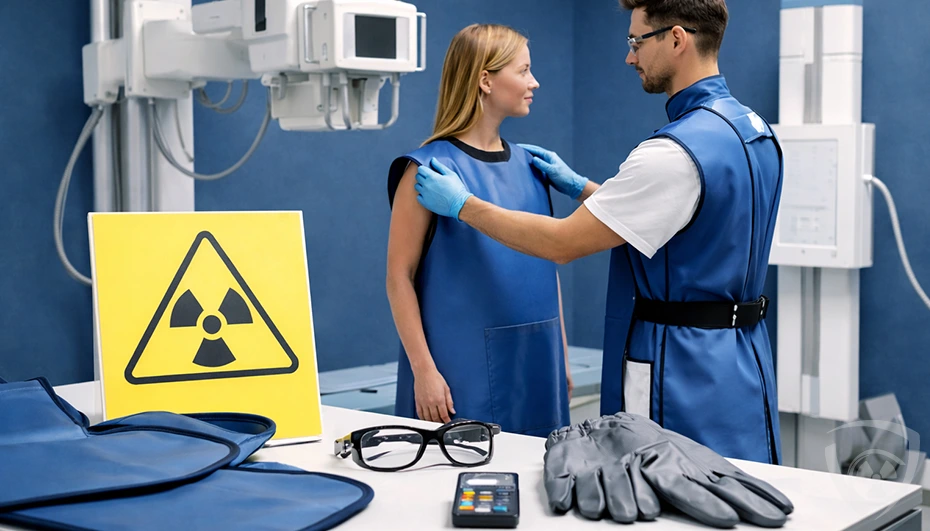
In everyday radiation protection, personal protective equipment (PPE)—such as X-ray protective aprons, thyroid shields, gloves, and protective eyewear—plays a vital role. Explore Coradika’s range of radiation protective clothing and accessories to ensure the safety of medical staff and patients.
Regulations and standards for ionizing radiation
Regulations governing ionizing radiation aim to protect people and the environment. Many countries have dedicated governmental agencies and international organizations responsible for monitoring and regulating radiation use. In Poland, radiological safety is supervised by the National Atomic Energy Agency (PAA).
International organizations such as the International Atomic Energy Agency (IAEA) and the International Commission on Radiological Protection (ICRP) develop safety guidelines and exposure limits that are adopted globally. International cooperation ensures consistent and effective radiation protection standards worldwide.
Ionizing radiation in medicine
Ionizing radiation plays a crucial role in medicine, both in diagnostics and therapy. Diagnostic imaging techniques such as X-ray imaging, computed tomography (CT), and scintigraphy allow physicians to visualize internal body structures with high accuracy.
Radiotherapy is widely used in cancer treatment, intentionally damaging cancer cells to destroy them. While healthy tissue may also be affected, modern techniques allow precise targeting, minimizing side effects.
Summary and conclusions
Ionizing radiation is an integral part of modern medicine, industry, and science. While it offers undeniable benefits, its potential health risks require careful control and appropriate protective measures. Understanding the nature, sources, and effects of ionizing radiation enables safe and responsible use.
Applying radiation protection principles—time, distance, and shielding—along with proper training and certified protective equipment significantly reduces risk and ensures safety for both professionals and patients. Responsible use of ionizing radiation allows society to benefit from its advantages while minimizing health hazards.


